


Landscape Lighting Installation in Fort Myers, FL

Fort Myers transforms after sunset, but without intentional illumination, architectural details and lush tropical plantings disappear into the dark. Professional landscape lighting installation in Fort Myers does more than extend evening hours outdoors. It defines property boundaries, highlights design elements, and provides security for Southwest Florida homes. A well-executed low-voltage system turns a standard yard into a nighttime environment that functions as safely at midnight as it does at noon.
Cintron Landscape Services treats outdoor lighting as a specialized discipline, separate from general landscaping or electrical work. The coastal environment demands specific material choices and installation techniques that generic solutions can't withstand. Homeowners who want lasting results need fixtures and methods built for salt air, high humidity, and the soil conditions found throughout Lee County.
Why Professional Landscape Lighting Matters for Fort Myers Homes
You invest significantly in your property's exterior, yet without proper illumination, that investment stays invisible for nearly half the day. Professional lighting design makes sure your home presents its best face to visitors and passersby regardless of the hour, while addressing the safety concerns that come with densely planted subtropical landscapes.
Enhancing Curb Appeal After Dark
Strategic illumination extends the visual impact of your architecture and landscaping well beyond daylight hours. Well-placed fixtures accentuate stucco textures, reveal the shape of palm trees, and create depth in garden beds that look flat under floodlights. This layering of light turns a dark facade into an inviting composition and lifts your home's presence in the neighborhood.
Effective curb appeal enhancement strategies treat darkness as a canvas, not a void to fill with indiscriminate brightness. Shadows matter as much as illuminated surfaces, creating contrast that flat wash lighting can't achieve. Your home's character comes through selective highlighting that guides the eye to intentional focal points instead of overwhelming the viewer with uniform glare.
Security Benefits of Strategic Outdoor Lighting
Dense tropical foliage gives you daytime privacy, but it also creates concealment opportunities for intruders after dark. Thoughtfully positioned pathway lighting eliminates these shadows without creating harsh pools of light that actually impair night vision. Motion-activated accents on vulnerable entry points deter unwanted activity while conserving energy during unoccupied hours.
Security lighting succeeds through coverage and consistency, not intensity. A professionally designed system makes sure no blind spots exist along perimeter walls, side yards, or rear access points where dense vegetation meets the structure. This approach protects your property while keeping the aesthetic quality that sets residential lighting apart from commercial security arrays.
SWFL-Specific Fixture Selection: Combating Humidity and Salt Air
Standard big-box fixtures fail fast in Southwest Florida because they lack protection against the region's corrosive atmosphere. Marine-grade polymer and solid brass fixtures resist the salt air common in coastal Fort Myers neighborhoods like Sanibel and Captiva, while aluminum alternatives oxidize within months. Choosing the right materials upfront prevents costly replacements and keeps the system intact through years of exposure.
Corrosion-Resistant Materials for Coastal Properties
Salt spray gets into microscopic gaps in fixture housings and attacks internal components long before any corrosion shows on the outside. Solid brass develops a protective patina that actually improves with age, and marine-grade polymers stay inert regardless of salt exposure. Powder-coated aluminum may look fine at first, but the coating eventually chips or cracks, exposing base metal to rapid deterioration in our humid climate.
Fixture construction matters as much as material choice. Sealed gaskets keep moisture out at lens interfaces and wire entry points, protecting electrical connections from the humidity that causes intermittent failures. Stainless steel fasteners need to match the corrosion resistance of the fixture body itself, because dissimilar metals in contact speed up galvanic corrosion in salt-laden air.
LED Technology for Florida's Climate
Low-voltage LED landscape lighting systems typically use 80% less energy than traditional halogen setups, and they last longer in high-humidity environments. Modern LEDs also generate less heat than halogen predecessors, which reduces thermal stress on sealed housings and helps prevent lens discoloration over time. That efficiency means lower operating costs and less frequent maintenance.
Not all LED fixtures perform equally in tropical conditions. Drivers need IP ratings suited for wet locations, plus conformal coatings that protect circuitry from moisture condensation inside sealed housings. Color temperature matters too, both for aesthetics and for wildlife considerations, with warmer tones generally preferred for residential applications near natural habitats or waterways.
Custom Lighting Design Process with Cintron Landscape Services
Every property presents its own challenges, and template designs can't address them well. Cintron Landscape Services operates directly out of Fort Myers at 7430 Musketeer Lane, which gives it localized expertise on SWFL soil conditions and microclimates that national chains lack. That local presence means responsive service and real familiarity with the environmental factors that affect lighting performance here.
On-Site Nighttime Demonstrations
Daytime consultations reveal placement possibilities but can't show actual lighting effects. Designers conduct nighttime demonstrations using temporary fixtures to preview beam angles, shadow patterns, and brightness levels before any permanent installation begins. You see exactly what you're buying and can ask for adjustments in real time, rather than hoping a rendering translates accurately to your property.
This demonstration phase removes the guesswork and keeps designer intent and homeowner expectations aligned. Adjustments made during preview cost nothing. Post-installation changes require more labor and materials. Seeing light interact with your specific architecture and plantings at night is far more reliable than catalog photos or computer simulations.
Integrating Lighting with Existing Hardscapes
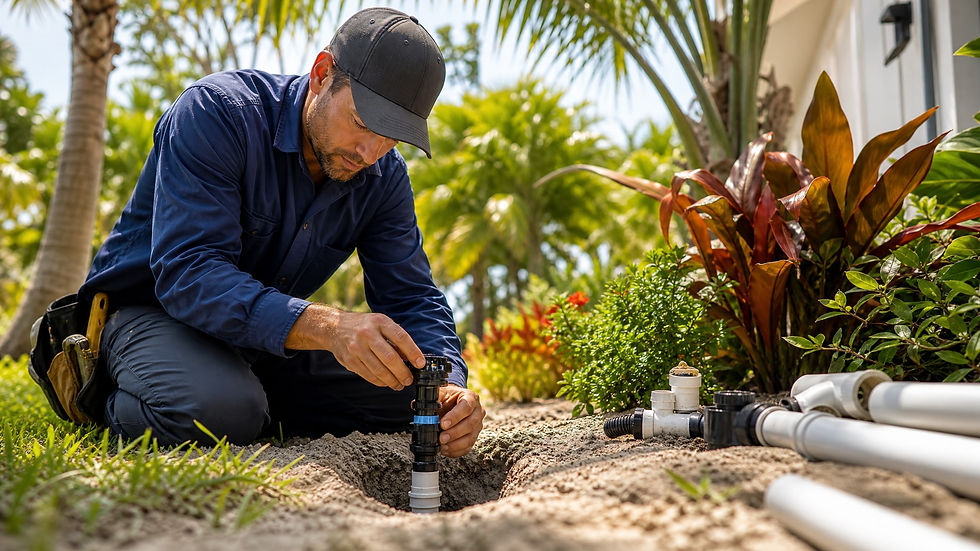
Trenching for low-voltage wiring takes careful coordination with existing irrigation lines, paver patterns, and root systems. Proper voltage drop calculations matter in sandy Florida soils, where wire resistance can fluctuate, to keep brightness consistent across all fixtures regardless of distance from the transformer. Experienced installers map underground utilities before breaking ground to avoid damaging infrastructure or compromising the hardscape.
Integrating lights with pavers and walls during initial hardscape installation gives cleaner results than retrofitting later. When working with established landscapes, technicians use specialized tools to tunnel beneath existing surfaces instead of cutting through them. This keeps your hardscape warranty intact and avoids the repair marks that detract from a finished look.
Popular Outdoor Lighting Applications in Southwest Florida
Regional vegetation and architectural styles call for lighting techniques that differ from what works in northern climates. Knowing which applications suit local conditions helps homeowners set realistic expectations and prioritize the investments that pay off. Highlighting native Florida flora requires different beam spreads and mounting heights than temperate-zone specimen trees or formal hedgerows need.
Pathway and Driveway Illumination
Pathway fixtures in Southwest Florida do two jobs: they guide foot traffic safely and define landscape edges after dark. Spacing and height have to account for mature plant growth, since tropical species expand fast and can engulf undersized fixtures within a single growing season. Adjustable stems and wider beam spreads handle that growth without annual repositioning or replacement.
Driveway lighting balances visibility with being considerate of neighbors. Downward-facing bollards or recessed paver lights give you adequate navigation guidance without casting glare into adjacent properties or adding to light pollution. Dark-sky compliant optics direct lumens precisely where needed, which respects local ordinances and preserves the nighttime environment that makes Southwest Florida special.
Uplighting Palms and Architectural Features
Palm trees present unique uplighting challenges because of their vertical growth habit and moving fronds. Multiple fixtures at varying distances create dimensional modeling that a single-point source can't achieve, revealing trunk texture and crown structure at once. Beam angle selection prevents excessive sky glow while still reaching the upper canopy, which defines the silhouette against the night sky.
Stucco walls benefit from grazing techniques that reveal surface texture through raking light angles. Fixtures mounted close to vertical surfaces emphasize material character, while distant placement produces flatter wash effects suited for color rendering or signage illumination. Architectural columns, arches, and eaves each need a tailored approach that respects proportion and avoids visual distortion.
Maintenance and Longevity of Low-Voltage Systems
Even premium fixtures degrade without regular attention in an aggressive coastal environment. Ongoing lighting system upkeep preserves both function and appearance, and keeps minor issues from turning into full system failures. Skipping maintenance speeds up depreciation and undercuts the investment you made in professional installation.
Lens cleaning removes salt residue, insect debris, and mineral deposits that build up despite sealed construction. Quarterly inspections catch loose connections, damaged wires, and failing drivers before they cause cascading problems elsewhere in the circuit. Transformer settings need periodic checks too, since load characteristics change as fixtures get added or LEDs get upgraded over the system's lifespan.
Vegetation management directly affects lighting performance in subtropical landscapes. Rapid plant growth obscures fixtures, alters intended beam patterns, and creates fire hazards when foliage contacts hot surfaces. Coordinated pruning schedules keep lighting doing its job instead of disappearing under unchecked tropical growth.
Choosing a Trusted Fort Myers Landscape Lighting Company
Your lighting investment depends entirely on installer competence and material quality. Vetting contractors thoroughly before signing contracts prevents disappointment and protects your property from substandard workmanship that requires expensive fixes. Local reputation and a verifiable project history matter more than glossy marketing materials or national brand affiliation.
Local Expertise vs. National Chains
Southwest Florida's environmental conditions differ fundamentally from other regions, so generic installation standards fall short here. Local firms understand seasonal water table fluctuations, hurricane preparation requirements, and species-specific growth rates that affect fixture placement and maintenance scheduling. National chains often rotate crews unfamiliar with these details, and the result is installations that fail early or need frequent correction.
Established local businesses stay accountable through community presence and long-term client relationships. They answer phones directly rather than routing calls through distant call centers, which means faster response times and more personal service. When storms damage systems or questions come up months after installation, a nearby partner who knows your specific property is worth having.
Warranties and Service Guarantees
Written warranties should spell out coverage duration separately for fixtures, transformers, and labor. Material warranties mean little if installer errors void manufacturer protections, or if service response takes weeks during peak season. Comprehensive guarantees cover both parts and workmanship, which shows the contractor trusts its own installation standards.
Service agreements formalize ongoing maintenance commitments and set priority response protocols for existing clients. These often include annual system audits, proactive component replacements, and seasonal adjustments that extend the system's life. Structured support protects your lighting investment the same way regular oil changes protect a vehicle engine.
Frequently Asked Questions
How much does professional landscape lighting installation cost in Fort Myers?
Project costs vary based on fixture count, site complexity, and material selections, typically ranging from $2,500 to $15,000 for residential properties. Cintron Landscape Services provides detailed quotes after on-site assessments rather than generic per-fixture pricing, as soil conditions and hardscape integration significantly affect labor requirements. Nighttime demonstrations are included in the consultation process so you understand exactly what your investment delivers before committing.
Will landscape lighting increase my electric bill significantly?
Modern LED low-voltage systems consume minimal electricity, typically adding only $5-$15 monthly to utility bills for average residential installations. This represents 80% less consumption than equivalent halogen systems while providing superior light quality and longevity. Timer controls and motion sensors further reduce operating costs by limiting runtime to necessary hours.
How long do outdoor lighting fixtures last in Southwest Florida's climate?
Marine-grade polymer and solid brass fixtures typically last 15-25 years in coastal environments when properly maintained, while aluminum alternatives may fail within 3-5 years. LED modules generally carry 5-10 year warranties, though actual lifespan depends on driver quality and heat management design. Regular maintenance extends component life significantly by preventing corrosion acceleration and connection degradation.
Can I add lighting to my existing landscape without major disruption?
Yes, experienced installers use trenching equipment and tunneling techniques that preserve established hardscapes and root systems. Wire routing follows existing bed edges and mulch lines wherever possible to minimize visible disturbance. Retrofit projects typically complete within 1-3 days depending on system size, with full site restoration included in the installation scope.
Do I need permits for landscape lighting installation in Fort Myers?
Low-voltage landscape lighting typically does not require permits in Lee County as it operates below code thresholds for hardwired electrical work. However, historic districts or HOA-governed communities may have additional approval requirements affecting fixture styles or placement. Cintron Landscape Services handles all necessary notifications and ensures compliance with local dark-sky ordinances and neighborhood covenants.
Comments