


Sod Installation Fort Myers: Best Grass Types & Cost

Choosing the right turf for a Southwest Florida property means understanding how specific grass varieties handle local sandy soil, salt spray, and seasonal rainfall. A successful sod installation in Fort Myers depends less on initial appearance and more on matching the grass's needs to your site's microclimate and how much upkeep you're willing to put in. Homeowners who skip that assessment often face thinning, weed invasion, or total turf failure within the first year.
Top Sod Varieties for Southwest Florida Lawns
St. Augustine grass remains the dominant choice for Fort Myers residential lawns. It tolerates shade under mature oak canopies better than Bahia or Zoysia, which is why it's the default recommendation in established neighborhoods where tree cover limits sunlight. St. Augustine establishes quickly in warm months and recovers well from minor foot traffic, though it needs consistent moisture and regular fertilization to stay dense.
St. Augustine vs. Zoysia vs. Bahia Performance
Zoysia has a finer texture and denser growth habit than St. Augustine, which gives it the manicured look homeowners want when curb appeal matters more than low maintenance. It handles moderate foot traffic better and resists certain pests, but it grows slower and takes longer to fill in bare spots after installation or injury. Bahia serves a different purpose: it thrives in full sun with minimal irrigation and fertilizer once established.
Bahia sod gets picked often for larger rural lots in North Fort Myers and Lehigh Acres, where low-maintenance durability matters more than the finer texture suburban lawns go for. Its coarse blade and open growth habit rule it out for formal lawn areas, but it does well in utility zones, drainage swales, and unattended perimeter strips. Choosing between these three comes down to what you value most: shade tolerance, refined texture, or drought resilience.
Salt Tolerance and Shade Requirements
Coastal properties in Sanibel, Bonita Springs, and Naples face salt spray that rules out many standard turfgrass options regardless of other site conditions. Seashore Paspalum and certain Zoysia cultivars handle saline environments better than St. Augustine, which shows tip burn and stunting under persistent ocean breezes. Properties west of McGregor Boulevard should prioritize salt-tolerant species even when other conditions favor traditional choices.
Shade is the opposite problem for inland lots with dense canopy cover or north-facing orientations. St. Augustine performs fine with four to six hours of filtered sunlight daily. Zoysia typically needs six or more hours of direct exposure to avoid thinning. Bahia fails outright in shaded conditions, so it only works on fully exposed sites.
Sod Replacement Cost Fort Myers Homeowners Should Expect
Total cost for a new lawn installation in Southwest Florida varies based on site accessibility, existing vegetation removal, and soil amendment needs more than on square footage alone. Professional installers say amending native sandy soil with organic matter before laying sod is the single most important factor for long-term root establishment in Lee County. Skip that step and you'll pay less upfront but more over time, through wasted water, fertilizer runoff, and eventual replacement.
Material vs. Labor Pricing Factors
Sod material costs shift by season and variety. Premium Zoysia cultivars cost more per pallet than standard St. Augustine or Bahia. Labor costs depend heavily on how easily a crew can reach the installation area, since narrow side yards, fenced backyards without gate clearance, and steep grades all add handling time. If sod has to be carried in by hand rather than delivered straight to the work zone, that adds labor charges that generic online calculators never show.
Expect your quote to reflect the real complexity of your site, not a flat rate times your lot size. Distance from the delivery truck to the installation point, obstacles like pools or AC units, and the need for protective ground covering all shape the final price. A transparent contractor itemizes these variables so you can see what's actually driving your estimate beyond material costs.
Site Preparation and Soil Amendment Expenses
Native Florida sand lacks the organic content and cation exchange capacity to support healthy turfgrass roots without help. Proper prep means tilling composted organic matter into the top four to six inches of soil, grading for positive drainage away from structures, and sometimes applying lime or sulfur based on pH test results. These amendments add real cost to a project, but skipping them undermines establishment.
Removing existing vegetation is another cost variable in any sod replacement budget. Killing and clearing old turf, weeds, or invasive species before installation prevents competition and disease carryover, but mechanical removal or chemical treatment takes extra labor and materials. Sites with heavy torpedo grass, nutsedge, or woody shrubs need more remediation than a lot that's bare dirt or lightly weeded.
Professional Sod Installation Process in Fort Myers
Professional installation differs from a DIY attempt mainly in how much soil prep and grading happens before any sod shows up. Amending sandy soil with mulching for soil health and organic compounds builds a rooting medium that holds moisture and nutrients through dry spells. Without that foundation, even premium sod struggles to root deeply and stays vulnerable when the weather turns extreme.
Soil Testing and Site Grading
Soil testing identifies pH imbalances, nutrient deficiencies, and salinity levels that determine which amendments a site needs. Lee County soils range from alkaline, shell-based substrates near the coast to acidic sandy profiles inland, and each needs its own correction strategy. Professional installers use these results to calibrate amendment rates precisely instead of applying generic recommendations that can make existing problems worse.
Grading moves water away from building foundations so it doesn't pool in low areas where turf drowns or develops fungal disease. The work involves laser-leveling or hand-grading to create uniform slopes of one to two percent across the lawn. Correct grading also ties into existing drainage infrastructure and keeps erosion channels from forming during Southwest Florida's heavy summer storms.
Post-Installation Watering Schedules
New sod typically needs daily watering for the first two weeks during Southwest Florida's dry season to prevent shrinkage and root desiccation, before you can shift to a standard irrigation schedule. During that window, soil has to stay consistently moist, not saturated, so roots grow downward instead of rotting. Morning watering cuts evaporation loss and shortens how long leaves stay wet, which matters because wet leaves invite disease.
After establishment, watering frequency drops gradually over four to six weeks as roots push deeper into the amended soil. Checking soil moisture at root depth guides that transition better than any calendar schedule. Reprogram automated irrigation to match the new turf's needs, and keep manual override available for surprise rain or equipment failures.
Common Mistakes in New Lawn Installation SWFL
Laying sod directly over unamended native sand is the most common cause of installation failure in Southwest Florida. The shallow root system that results can't reach subsurface moisture during dry spells, so the lawn stays dependent on frequent irrigation and becomes more vulnerable to chinch bugs and fungal disease. The shortcut saves money upfront but costs more over time in water bills, chemical treatments, and early renovation.
Ignoring irrigation timing and coverage uniformity is the second most common failure. Running sprinklers at midday wastes water to evaporation before it reaches the root zone, and uneven head spacing leaves dry patches that never recover no matter how much total runtime you give them. New sod needs precise moisture delivery matched to how fast the soil absorbs it, not timer settings copied from the neighbor's yard.
Skipping thorough vegetation removal before installation lets weeds and diseased tissue persist under fresh sod. These contaminants compete with establishing turf and often push through seams within weeks, forcing herbicide treatments that stress young grass. Clearing the site completely, with solarization or herbicide treatment beforehand if needed, eliminates this recurring problem.
Integrating Sod with Irrigation and Landscape Design
Sod selection has to match your irrigation capacity and coverage uniformity, or you'll see chronic stress in zones that don't get enough water. Understanding irrigation system installation costs helps you budget for upgrades when existing infrastructure can't keep up with your chosen turf. High-water-use grasses like St. Augustine need dedicated zones with matched precipitation rate heads, while drought-tolerant Bahia tolerates wider spacing and lower-output emitters.
Matching Grass Type to Water Availability
Properties with limited well capacity or restricted municipal allocations do better choosing turf built for lower irrigation volumes rather than fighting the constraint. Zoysia and Bahia hold acceptable quality on less water than St. Augustine once established, which makes them practical for water-conscious homeowners or sites with aging irrigation. Pair a high-demand grass with a supply that can't support it, and decline is guaranteed regardless of installation quality or maintenance.
Microclimate mapping shows where sun exposure, wind, and soil moisture retention differ across a single property. Those differences are reason enough to use multiple turf types strategically instead of forcing one variety to perform everywhere. A shaded courtyard can run St. Augustine while an exposed front yard runs Zoysia, which gets you better performance and better use of water at the same time.
Transition Zones Between Sod and Hardscape
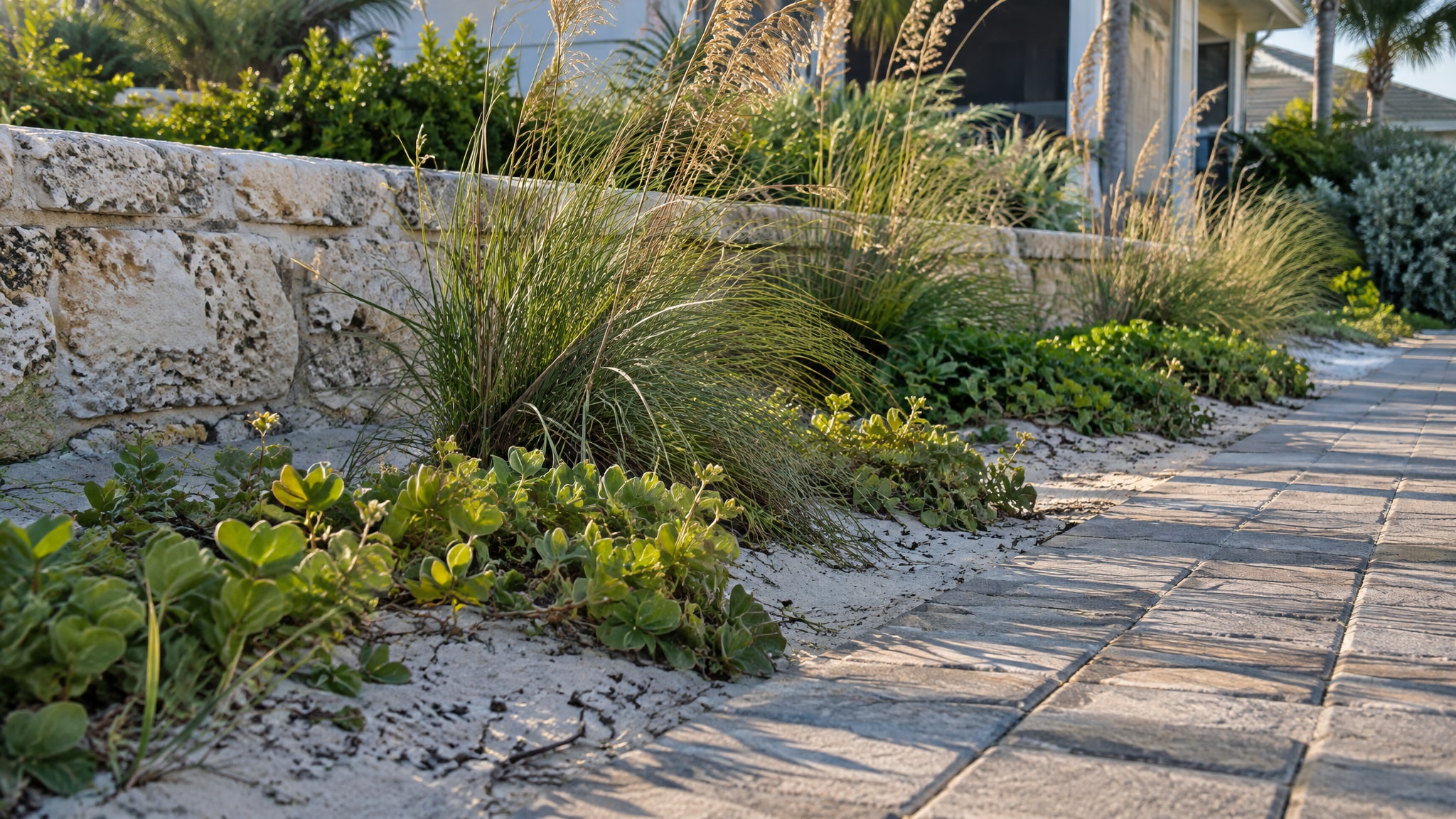
Proper edging along patios, walkways, and driveways keeps turf from encroaching and protects adjacent surfaces from mower damage. Metal or concrete borders set flush with finish grade create clean lines that simplify maintenance and sharpen the visual line between lawn and hardscape. Choosing the right companion plants for Florida lawns in border beds softens those transitions and cuts down on edge trimming.
Heat radiating off paved surfaces stresses adjacent turf more than it stresses the lawn's interior. Reflective glare from light-colored walls and windows creates similar hotspots that scorch sensitive grass during summer afternoons. Accounting for these thermal effects during design heads off dieback patterns that would otherwise undercut a sound installation.
Long-Term Lawn Maintenance Tips for Fort Myers Grass
St. Augustine lawns in Southwest Florida need mowing heights between three and four inches to keep enough leaf area for photosynthesis and to shade out weed seedlings. Cut it shorter and you expose soil to excess solar heat, speed up moisture loss, and weaken the stolons responsible for lateral spread and recovery. Mow by growth rate, not by calendar, and never remove more than a third of the blade length in one cut.
Fertilize during active growth periods in spring and fall, and skip summer applications, which push tender growth that's vulnerable to pests and heat stress. Slow-release nitrogen feeds steadily over eight to twelve weeks and leaches less in sandy soil than quick-release alternatives. Test soil every two to three years to confirm nutrient balance, since organic matter decomposes and irrigation water chemistry shifts over time.
Professional ongoing lawn maintenance plans keep care standards consistent and catch problems early, which homeowner efforts often miss. Trained technicians recognize subtle signs of nutrient deficiency, insect activity, or irrigation malfunction before the damage becomes visible. That preventive approach protects your installation investment and keeps curb appeal up through the seasonal swings that challenge casual observers.
Choosing a Local Sod Installation Expert
Established Fort Myers landscapers bring site-specific knowledge built from years of working with local soil profiles, microclimates, and regulatory requirements. That translates into accurate variety recommendations, realistic timelines, and installation methods calibrated to regional conditions rather than generic national guidelines. General laborers without that local experience may bid lower, but they often underestimate preparation needs or pick the wrong turf for a site's specific challenges.
A direct conversation with a landscape expert lets you discuss your property's characteristics, maintenance preferences, and budget in real time. A phone call reveals responsiveness and communication style a website never can, which helps you judge whether a contractor stays accessible through the project and after. Cintron Landscape Services offers that level of personal attention from its Fort Myers base, serving homeowners and property managers across Cape Coral, Estero, Bonita Springs, Sanibel, North Fort Myers, Naples, and Marco Island.
Site assessments conducted before quoting show a commitment to accuracy over convenience, and they catch the hidden variables that affect scope. A contractor willing to visit your property before estimating respects the complexity of proper sod installation and knows that remote calculations rarely capture what a project actually requires. That diligence is what separates a professional invested in a long-term client relationship from a vendor just trying to close a sale.
Frequently Asked Questions
Can I lay sod directly over existing dirt without soil preparation?
No, laying sod over unamended Florida sand leads to shallow rooting and rapid failure because native soil lacks organic matter and nutrient-holding capacity. Professional installation always includes tilling compost into the top four to six inches to create a viable rooting medium. Skipping this step increases long-term water and fertilizer costs far beyond the savings from omitted preparation.
How much does it cost to sod a yard in Fort Myers?
Total cost depends on site accessibility, soil amendment needs, and vegetation removal requirements rather than square footage alone. Premium Zoysia varieties cost more per pallet than St. Augustine or Bahia, and labor increases significantly for fenced backyards or narrow access points. Request an on-site assessment for an accurate quote reflecting your property's specific conditions.
What are common mistakes when installing new sod in Florida?
The most frequent errors include laying sod over unamended sand, watering at wrong times of day, and failing to remove existing weeds before installation. These oversights cause shallow roots, excessive evaporation, and weed competition that undermines establishment. Professional installers address each through proper soil prep, timed irrigation programming, and thorough site clearing.
How do I coordinate sod installation with my irrigation system?
Test your irrigation system's coverage uniformity and output capacity before selecting a sod variety to ensure adequate water delivery. Reprogram controllers for new turf establishment schedules and verify head spacing matches the chosen grass type's water requirements. Budget for zone modifications or head replacements if existing infrastructure cannot support your selected variety's needs.
Comments