


Tree Trimming Service Fort Myers, FL | Cintron Landscape

Cintron Landscape Services trims trees and palms as one part of full landscape maintenance for homes and commercial properties in Fort Myers, Cape Coral, Estero, and North Fort Myers. The crew works out of 7430 Musketeer Lane in Fort Myers, so the people quoting your job know local soil, storms, and the palms that line local streets.
Want a quick answer on a specific tree? Cintron offers direct phone consultations with a Landscape Expert. Call, describe what you see, and find out whether it needs trimming now or can wait for the right season. The current phone number and business hours are listed on the Cintron website.
Fort Myers Tree Trimming Services as Part of Full Landscape Maintenance
A tree trimming service in Fort Myers works best when it runs on a schedule next to the rest of your yard care. Trimming done only after a limb drops tends to cost more, take longer, and damage whatever sits underneath.
Think of the canopy as the roof over your turf and beds, and you can see why it belongs in the same plan as mowing, mulching, and bed work.
How Trimming Fits Your Lawn and Bed Maintenance Calendar
Thinning a dense canopy lets light and airflow reach the grass and plantings below, which helps thin turf recover and keeps beds from staying damp and shaded all day. Scheduled visits also catch deadwood early, while it is still a small cut rather than an emergency call after a storm.
In practice, trimming slots in between regular lawn and bed visits. Mulch refreshes, edging, and fertilizing happen on their own rhythm, and a trimming pass gets timed so debris is cleared before the next mow. If you already have recurring service, lawn maintenance plans in Fort Myers show how the visits stack up, and the landscape maintenance packages page explains how trimming can sit inside a recurring plan instead of being a one-off job.
Property managers get the same logic at a larger scale. Commercial landscaping in Fort Myers covers how trimming gets scheduled across a whole site alongside other grounds work.
What Shapes the Scope and Quote for a Trimming Job
Four things drive almost every quote: tree height, access, debris volume, and palm count. A 40-foot oak behind a locked fence with no truck access is a different job from a row of low palms along a driveway, even if both take an afternoon.
Height decides what equipment and how many people. Access decides whether the crew can bring tools in or has to carry everything by hand. Debris volume decides hauling, and the number of palms decides how long the crew stays on site.
You get the most accurate quote when you can describe those four things up front. Photos and a short phone call usually cover it, though a final price for large or tangled jobs may need a look on site.
Palm Tree Trimming in Fort Myers: What to Cut and What to Keep
Palm tree trimming in Fort Myers is simpler than most people expect, but it is easy to get wrong. Palms are not trees with a different shape. They grow from a single bud at the top, and every cut either helps or hurts that growing point.
The palms common in local yards each behave differently, so one schedule never fits them all:
Cabbage palm (sabal palm): sheds old fronds gradually and is often left fairly natural.
Queen palm: sheds fronds and seed clusters steadily over walkways and pool decks, so it needs frequent attention where people walk and swim.
Mexican fan palm: holds dead fronds in a hanging skirt until someone removes them, so it needs a scheduled cleanup.
Coconut palm: drops heavy fronds and fruit, which matters over driveways, seating areas, and entries.
Remove Dead and Fully Brown Fronds, Keep the Green Ones
Green fronds are the palm's food factory, so a healthy palm generally needs only dead or fully brown fronds removed. Fronds that are partly yellow can still feed the palm, and cutting them early takes energy away from the tree.
Two rules protect a palm:
Never cut into the bud at the crown. It is the only growing point, and a palm with a damaged bud usually does not recover.
Leave green fronds in place unless they threaten a roof, screen, or walkway.
Seed clusters and fruit are a separate call. Removing them keeps the mess off pool decks and patios, and it does not harm the palm.
Why Hurricane Cuts and Over-Trimming Weaken Palms
Some owners strip a palm down to a few upright fronds before a storm, the so-called hurricane cut. It looks tidy, but it is discouraged because a palm stripped of green fronds has fewer leaves left to make food.
Arborists treat heavy crown stripping as an avoidable stress, not a storm defense. A stripped palm grows slowly, and the stress can leave it open to decline.
Selective cuts timed to the palm's actual condition are the accepted alternative. If you want a palm to ride out a storm better, remove only the dead fronds and any hanging seed clusters that could become projectiles.
Tree Pruning Timing for Southwest Florida Palms and Native Trees
Timing for tree pruning in SWFL is the part most provider listings skip. The Atlantic hurricane season runs through the end of this month, so the calendar you work from right now is different from the one you will use in a few weeks.
Shade trees follow the season, while palms follow frond condition and any limb tangled in power lines belongs to the utility, not to you or your landscaper.
The practical result is that you can plan heavy work for cooler, drier months and keep storm-season visits focused on hazards.
Dry-Season Structural Pruning for Shade Trees
Heavy structural cuts on shade trees are generally easier to justify in the cooler, drier months, when growth is slower and wounds dry faster. With the storm season ending, late fall through winter is the window to book large pruning jobs on oaks and other canopy trees.
Structural pruning means choosing which limbs stay, which go, and how weight is spread across the crown. It is slower work than a quick haircut, and it pays off for years because the tree carries its own weight better when the next storm arrives.
Palms do not wait for this window. If a palm has dead fronds, they can come off in any month.
Storm-Season Trimming and Post-Storm Cleanup
During storm season, trimming should target dead, weak, or overhanging limbs, and it should leave healthy canopy alone. Before a storm, that means removing what is likely to break. After one, it means clearing broken material safely.
Overhanging limbs above screened lanais and pool cages are a typical Fort Myers concern, since one broken limb can puncture a screen enclosure and let wind and rain inside. If one hangs over yours, have it assessed before the next forecast cone points your way. For the rest of the yard, storm-season yard preparation gives a wider checklist.
Do not trim anything that touches or sits near a power line. Call the utility and let its crews handle it.
Pruning Native Trees Without Topping
Native trees reward patient pruning and punish shortcuts. Live oak, gumbo limbo, bald cypress, and coco plum are common native choices in Fort Myers yards, and each does best with deadwood removal and a few well-placed structural cuts.
Topping is the shortcut to avoid. It means cutting limbs back to stubs, and the tree answers with a flush of weakly attached shoots that can snap in the next storm.
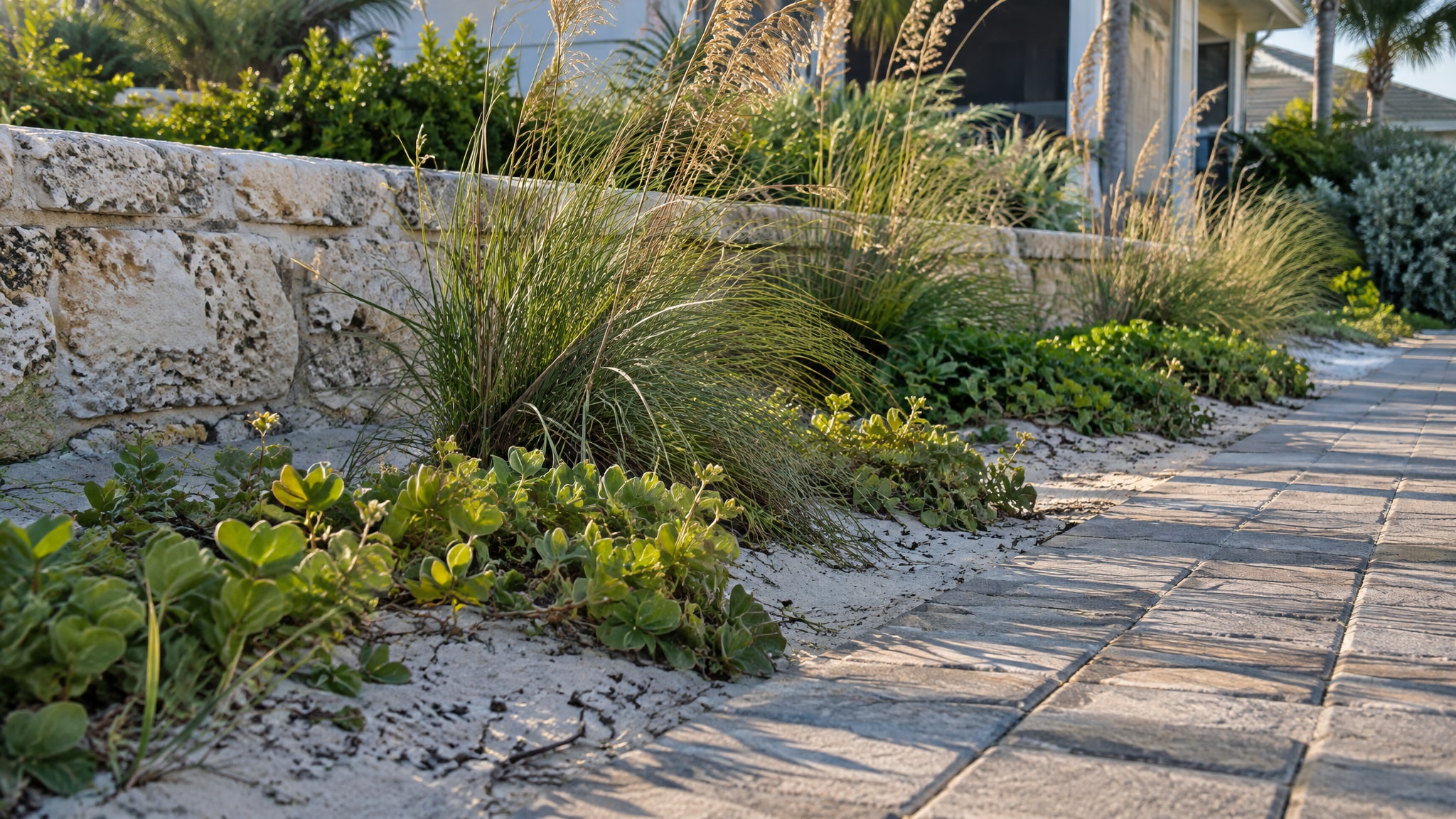
If you are still choosing what to plant, native plants for Fort Myers yards is a good place to start before you decide how much pruning you want to take on.
Structural Cuts That Keep a Native's Natural Shape
A good structural cut removes a whole limb back to its branch collar or to a larger side branch. It does not leave a stub. The aim is to reduce weight and crossing branches while the tree keeps the shape it was built to have.
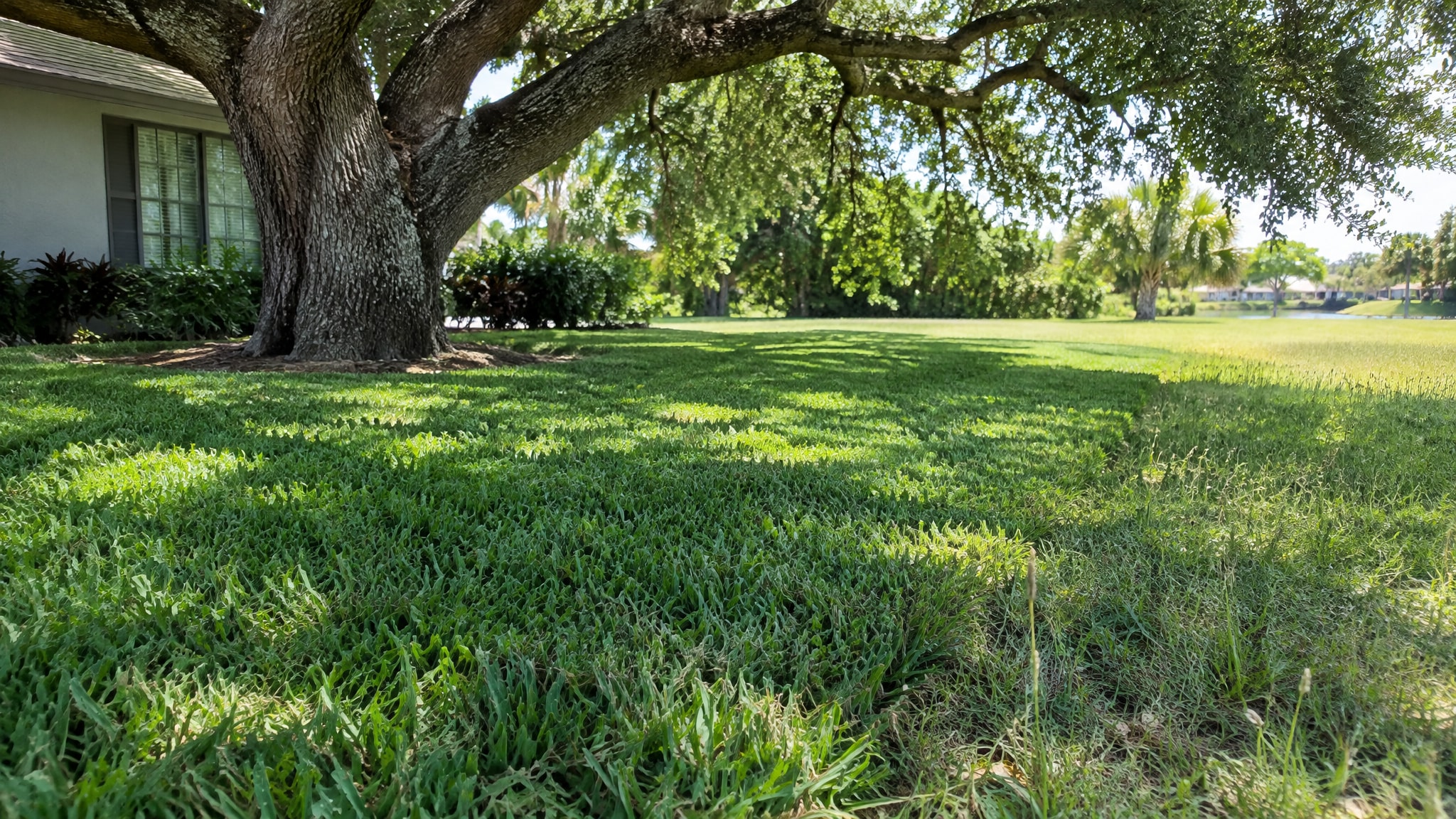
A live oak, for example, spreads wide, and its low horizontal limbs are part of its character. Shortening them to a stub trades that shape for a weak patch of regrowth. Taking out one crossing limb and lifting the canopy over a driveway does the job without that cost.
Pruning cannot fix a tree planted in the wrong spot or one with a failing root system. It manages growth, and it does not replace choosing the right species for the space.
Signs a Tree or Palm Needs Trimming Now
Some signs are easy to spot from the driveway. If you see any of these, it is time to call rather than wait for the next scheduled visit:
Dead or hanging limbs, especially over the house, cars, or seating areas.
Branches rubbing against a roof, gutter, screen enclosure, or pool cage.
Limbs or shrubby growth blocking sightlines at a driveway or corner.
Palm fronds dropping, or hanging dead, over walkways or pool areas.
A single hanging limb is a reason to call today. A canopy that is simply getting full can wait for the next season's window, and a short phone conversation with a Landscape Expert can tell you which one you have.
Fort Myers Arborist Services: What to Check Before You Hire
Fort Myers arborist services vary a lot, and the lowest quote often leaves out the things that matter after a limb comes down. Ask a few direct questions before anyone climbs a tree on your property.
Ask about insurance and licensing first. Confirm what coverage is in place and whether any local license is required for the work, since an uninsured crew leaves the property owner exposed if something goes wrong. Then ask how storm response is handled, because you will want a contact who answers when a limb comes down in August.
Credentials, Insurance, and Written Scope
Find out whether the lead arborist holds a recognized credential such as ISA Certified Arborist, and who will be on site the day of the work. The person who assesses your trees and the person who cuts them are not always the same, and you are entitled to know who is which.
Then read the written scope. It should say which trees and palms are included, what will be cut, and whether debris removal and cleanup are part of the price. A quote that stops at "trim" and says nothing about hauling leaves you with a pile in the yard.
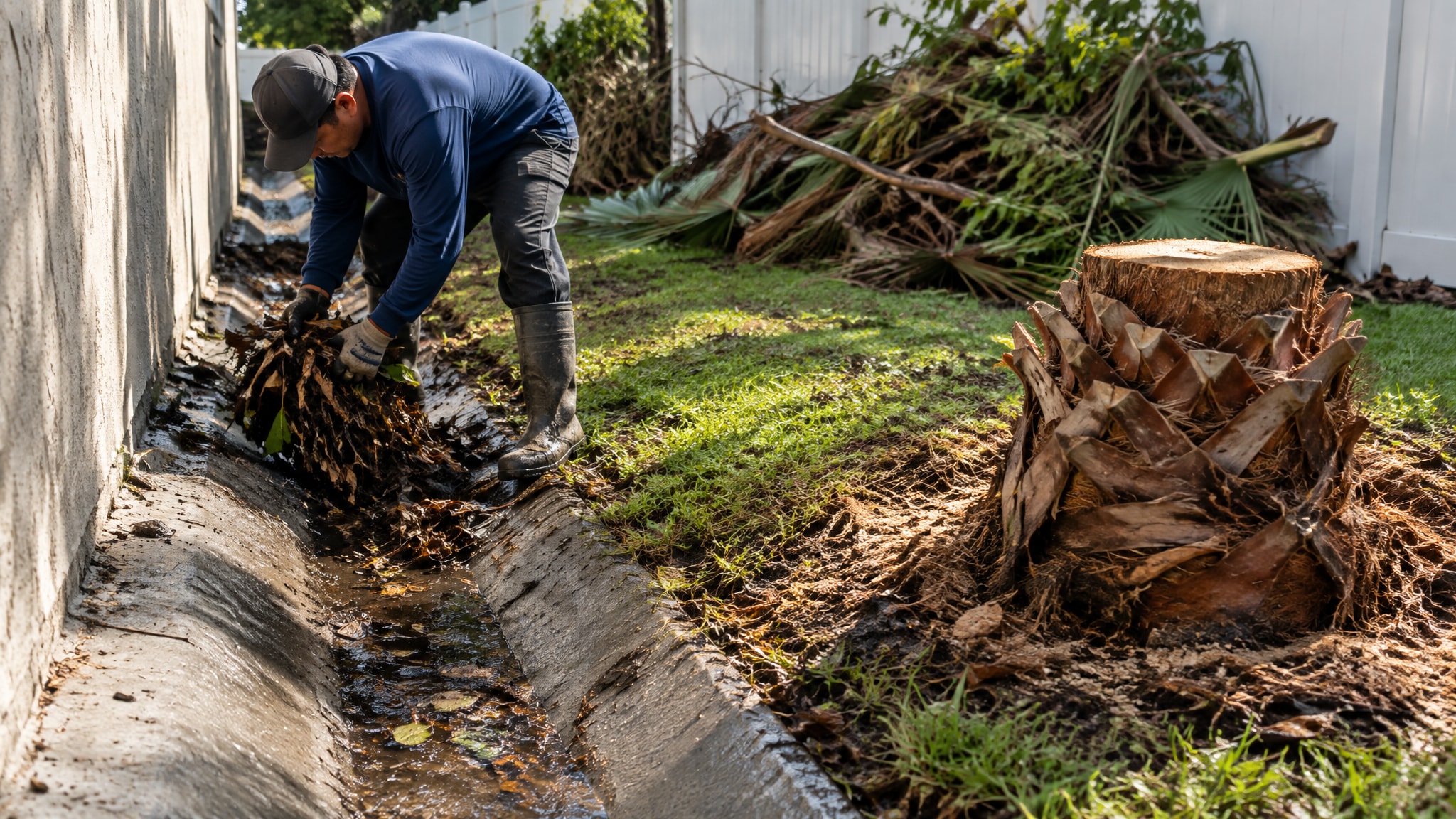
One more question belongs before any cutting starts: how does the company decide between trimming and tree removal in Fort Myers, FL? Trimming handles most overgrowth and deadwood. A tree that is dead, leaning, or root-compromised may need removal instead, and an arborist should assess it on site before anyone cuts.
Add Tree Trimming to Your Maintenance Plan
If the trees and palms on your property are not on a schedule yet, now is a good time to add them. Call Cintron Landscape Services for a phone consultation with a Landscape Expert and describe what you see. Ask whether a specific tree or palm needs trimming now, and ask to have trimming added to your maintenance plan.
Cintron's phone number and business hours are listed on the Cintron website. You can see the full range of work on the page for Cintron's Fort Myers landscape services.
Call Cintron Landscape Services today, tell the Landscape Expert which trees and palms you have, and get trimming on the calendar.
Frequently asked questions
Can I trim my own palm trees?
You can remove dead, fully brown fronds from a low palm if you stay clear of the bud at the crown. Tall palms, anything near power lines, and heavy fruit or seed clusters are better left to a crew with the right equipment and insurance.
Is a hurricane cut a good way to get a palm ready for a storm?
No. Stripping green fronds leaves the palm with fewer leaves to make food and does not make it stronger in the wind. Removing only dead fronds and hanging seed clusters is the safer preparation.
When is the best time to prune shade trees in Fort Myers?
Heavy structural pruning is generally easier to schedule in the cooler, drier months, when growth is slower and wounds dry faster. Storm season is better kept for removing dead, weak, or overhanging limbs.
Who handles a tree limb that is tangled in a power line?
The utility does. Keep clear of the line, and call the utility instead of trimming it yourself or asking a landscaper to cut near it.
How do I know if a tree needs removal instead of trimming?
A tree that is dead, leaning, or has compromised roots may need to come out rather than be trimmed. An arborist should assess it on site before any cutting begins, and you should ask how that decision gets made.
Comments